
Table of Contents
- 1 What Is a Diploma Assignment?
- 2 Diploma Levels in the UK (RQF Explained)
- 3 Common Diploma Assignment Types
- 4 How Diploma Assignments Are Marked
- 5 Why Students Lose Marks in Diploma Assignments
- 6 Recommended Diploma Assignment Structure
- 7 Referencing Requirements
- 8 Diploma Resubmissions and Referrals
- 9 Subject-Specific Diploma Support
- 10 How Academic Guidance Can Help
- 11 Final Thoughts
- 12 Frequently Asked Questions
- 12.1 1. What is a diploma assignment in the UK?
- 12.2 2. What does RQF mean in diploma courses?
- 12.3 3. Are diploma assignments different from university essays?
- 12.4 4. How are diploma assignments marked?
- 12.5 5. Why do diploma assignments get referred?
- 12.6 6. Can I resubmit a diploma assignment if it is referred?
- 12.7 7. What referencing style is used in diploma assignments?
- 12.8 8. What is Turnitin similarity in diploma assignments?
- 12.9 9. How long should a diploma assignment be?
- 12.10 10. Can I get academic guidance for diploma assignments?
- 12.11 11. Are diploma assignments the same for all subjects?
- 12.12 12. What is the best way to improve diploma assignment grades?
Expert Assignment Help
If you need help understanding your assignment brief, learning outcomes, or feedback, you can explore academic guidance options or speak with an expert for clarity before submission.
Summary:
Diploma assignments in the UK are evaluated using structured learning outcomes and assessment criteria rather than general essay standards. Awareness of marking frameworks, common errors, and effective academic practices leads to stronger submissions and better results.
Diploma assignments can feel confusing, especially when requirements are not explained clearly by tutors. Many students struggle to understand what is expected, how assignments are marked, and why feedback often mentions “lack of analysis” or “insufficient evaluation” even when the writing looks fine.
This guide explains how diploma assignments work in the UK, what assessors look for, and how students can improve their work without breaking university or awarding-body rules. It is written for learners studying RQF Levels 3 to 7, including BTEC, Pearson, NCC, ATHE, OTHM, and other regulated diplomas.
If you are unsure why marks are being lost — or how to approach your next submission — this page will walk you through everything step by step.
Need Help With a Diploma Assignment?
If learning outcomes or assessment criteria feel confusing, get structured academic guidance aligned with UK diploma standards.
Explore our Assignment Writing Services or WhatsApp us: +44 744 191 5956
What Is a Diploma Assignment?
A diploma assignment is an assessed piece of coursework used to evaluate whether a student has met specific learning outcomes defined by the awarding body.
Unlike school essays, diploma assignments are:
-
outcome-based rather than opinion-based
-
assessed against strict criteria
-
focused on practical understanding
-
written using evidence, examples, and application
Each assignment is linked to one or more learning outcomes (LOs) and assessment criteria (ACs) that must be clearly addressed in the work.
If even one criterion is missed, the assignment may be referred or graded lower.
Diploma Levels in the UK (RQF Explained)
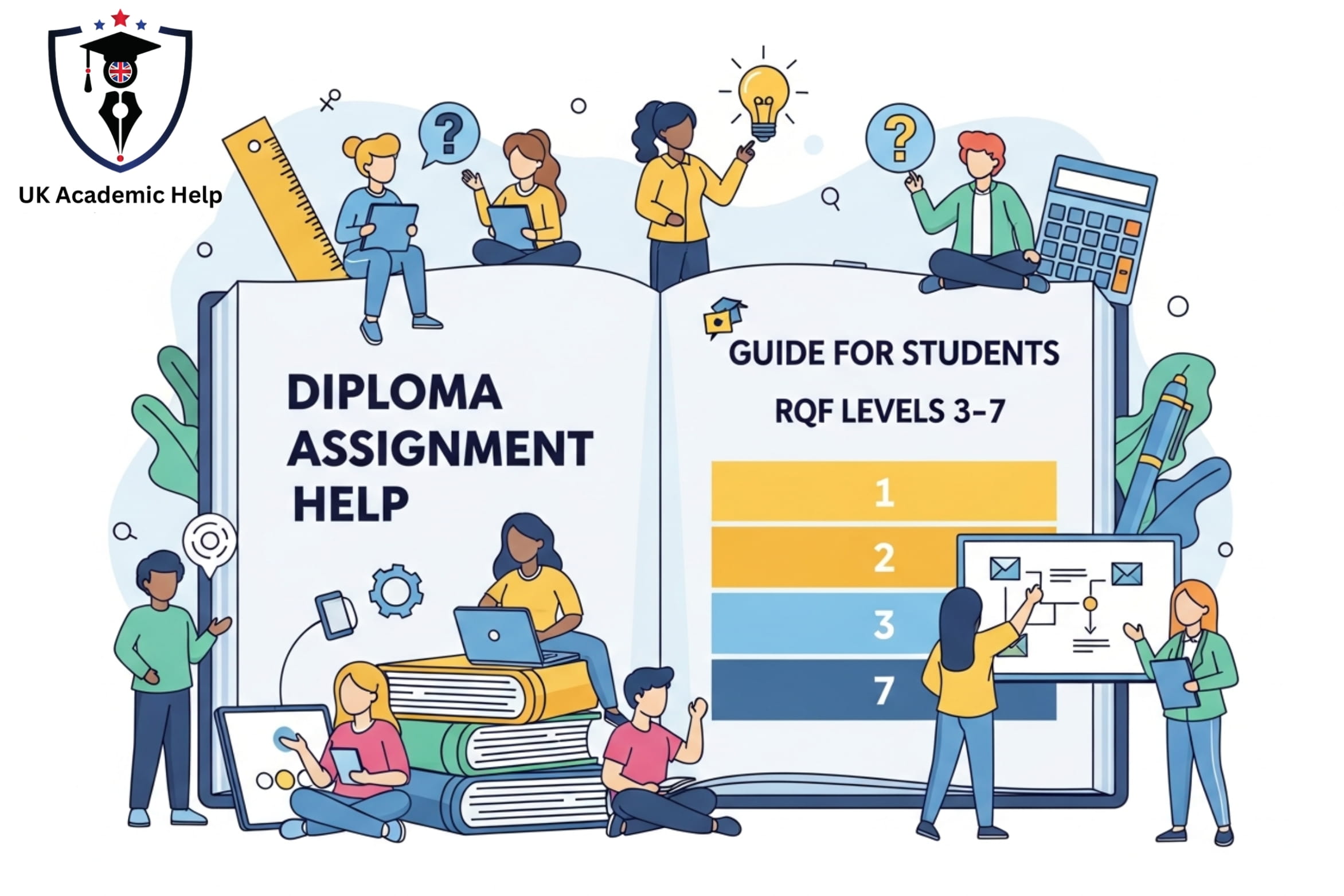
Diplomas in the UK are regulated under the Regulated Qualifications Framework (RQF).
Here is how levels typically work:
| RQF Level | Equivalent Study Level |
|---|---|
| Level 3 | A-Level equivalent |
| Level 4 | First year of undergraduate |
| Level 5 | Second year of undergraduate |
| Level 6 | Final year undergraduate |
| Level 7 | Master’s level |
As the level increases, assignments require:
-
deeper analysis
-
stronger academic referencing
-
application of theory
-
critical evaluation
-
real-world examples
Understanding your RQF level is essential before starting any assignment.
Common Diploma Assignment Types
Depending on your subject and awarding body, diploma assignments may include:
-
written reports
-
case study analysis
-
reflective accounts
-
scenario-based tasks
-
research-based reports
-
portfolios of evidence
Each format has different expectations, even when the topic appears similar.
How Diploma Assignments Are Marked
Most UK diploma providers follow marking frameworks issued by bodies such as:
-
Pearson (BTEC)
-
ATHE
-
OTHM
-
NCC Education
-
City & Guilds
Assessors evaluate assignments using:
-
learning outcomes (LOs)
-
assessment criteria (ACs)
-
pass / merit / distinction descriptors
Marks are not awarded for length or grammar alone. Instead, assessors look for:
-
direct coverage of criteria
-
correct use of theory
-
relevant examples
-
clear structure
-
appropriate referencing
Missing one criterion can result in a referral, even if the rest of the assignment is strong.
Why Students Lose Marks in Diploma Assignments
The most common problems include:
1. Not answering the assessment criteria directly
Many students write generally about a topic but fail to clearly link the content to each criterion.
2. Description instead of analysis
Diploma work requires explanation, not just definitions.
3. Weak structure
Assignments must follow logical sections that align with the learning outcomes.
4. Poor referencing
Incorrect Harvard referencing is one of the most frequent reasons for deductions.
5. Limited application
Assessors expect examples, workplace scenarios, or case-based discussion.
Diploma Assignment Support (RQF Levels 3–7)
If you’re losing marks due to missed criteria, weak analysis, or unclear structure, targeted academic guidance can help you align your work with assessor expectations.
- Share your unit brief, LOs, and ACs
- Tell us where you’re stuck (structure, referencing, application, etc.)
- Receive expert feedback aligned with UK awarding-body standards
Start here: Assignment Writing Services or visit our Contact Page.
Need urgent help? WhatsApp: +44 744 191 5956
Recommended Diploma Assignment Structure
While formats vary, most diploma assignments follow this structure:
-
Introduction
-
Overview of learning outcomes
-
Main discussion aligned with each criterion
-
Application or example section
-
Evaluation or reflection (where required)
-
Conclusion
-
Reference list
Using headings that clearly reference learning outcomes often improves clarity for assessors.
Referencing Requirements
Most UK diploma providers use Harvard referencing.
Common issues include:
-
missing in-text citations
-
incorrect reference lists
-
outdated sources
-
inconsistent formatting
Even when plagiarism is not present, referencing mistakes can still reduce grades.
Turnitin similarity reports are commonly used to check originality, but similarity is not the same as plagiarism. Understanding how Turnitin works helps students avoid unnecessary concern.
Diploma Resubmissions and Referrals
If an assignment is referred, students are usually allowed:
-
one resubmission attempt
-
limited time window
-
correction only of failed criteria
Resubmissions require careful review of assessor feedback. Rewriting without addressing the feedback directly often leads to repeat referral.
Subject-Specific Diploma Support
Diploma requirements vary by subject. You can explore guidance for common pathways including:
- Leadership & Management
-
Human Resource Management
-
Project Management
-
Marketing and Digital Marketing
-
Information Technology
-
Computer Science
-
Engineering and Mechanical Engineering
-
Construction Management
-
Health and Social Care
-
Hospitality and Tourism
-
Logistics and Supply Chain
-
Education and Training
Each subject applies learning outcomes differently, even at the same RQF level.
How Academic Guidance Can Help
Many students seek academic guidance when they:
-
do not understand assessor feedback
-
struggle with structure
-
are unsure how to meet learning outcomes
-
need help improving clarity and flow
-
want feedback before submission
Support typically focuses on:
-
explaining criteria
-
improving organisation
-
identifying gaps
-
correcting referencing
-
strengthening analysis
This helps students improve their own work while remaining compliant with academic integrity policies.
For students needing broader academic assistance, our Assignment Writing Help explains available options in more detail.
Ready to Improve Your Diploma Grades?
Diploma assignments are assessed on clear learning-outcome coverage, correct application, and structured evidence — not just writing quality. If you want to reduce referrals and submit with confidence, our specialists can guide you step by step within UK awarding-body regulations.
- Visit our Assignment Writing Services page
- Send your brief, feedback, or draft
- Receive tailored diploma-level academic support
- Submit a clearer, criteria-aligned assignment
Quick contact: Contact Page
WhatsApp support: +44 744 191 5956
Final Thoughts
Diploma assignments are not about writing long answers, they are about meeting learning outcomes clearly and accurately.
Once students understand:
-
How assignments are marked
-
What assessors expect
-
How structure affects grades
-
How evidence should be used
Their results often improve significantly.
If you are unsure about your assignment requirements, seeking clear academic guidance early can prevent referrals and unnecessary stress later.
Frequently Asked Questions
1. What is a diploma assignment in the UK?
A diploma assignment is an assessed coursework task used to check whether a student has met specific learning outcomes set by the awarding body. It is usually marked against assessment criteria rather than general essay quality.
2. What does RQF mean in diploma courses?
RQF stands for the Regulated Qualifications Framework. It defines the academic level of a qualification in the UK, ranging from Level 3 (A-level equivalent) to Level 7 (postgraduate level).
3. Are diploma assignments different from university essays?
Yes. Diploma assignments focus more on learning outcomes, practical application, and assessment criteria. University essays often place greater emphasis on argument, theory, and critical discussion.
4. How are diploma assignments marked?
Assignments are marked using learning outcomes and assessment criteria provided by the awarding body. Each criterion must be clearly addressed for the work to pass or achieve higher grades.
5. Why do diploma assignments get referred?
Common reasons include missing assessment criteria, weak application of theory, unclear structure, poor referencing, or not following the assignment brief closely.
6. Can I resubmit a diploma assignment if it is referred?
Most awarding bodies allow one resubmission opportunity. Students must address the assessor’s feedback directly and correct only the areas that did not meet the criteria.
7. What referencing style is used in diploma assignments?
Harvard referencing is the most commonly used style, although some providers may specify alternatives. Always follow the guidance given in your assignment brief.
8. What is Turnitin similarity in diploma assignments?
Turnitin checks text similarity against published sources and student databases. A high similarity score does not always mean plagiarism, but it should be reviewed carefully before submission.
9. How long should a diploma assignment be?
Word count varies depending on the unit and level. Most diploma assignments range between 1,000 and 3,000 words, but the assignment brief should always be followed.
10. Can I get academic guidance for diploma assignments?
Yes. Many students seek academic guidance to understand learning outcomes, improve structure, review drafts, and clarify assessor feedback, while still completing the work themselves.
11. Are diploma assignments the same for all subjects?
No. Requirements differ across subjects such as business, accounting, health and social care, IT, or engineering. Each subject applies learning outcomes differently.
12. What is the best way to improve diploma assignment grades?
Improvement usually comes from clearly addressing assessment criteria, applying relevant theory, using examples, improving structure, and following referencing rules accurately.





Leave A Comment